How Government Frustrates SMEs in Nigeria
Nigeria is a country blessed with human and material resources. Nigeria is the most populous black nation on earth and Nigerians are hard-working, goal-oriented, and smart.
Nigerians stand out in other countries. They are among the best in any chosen field.
They prosper easily elsewhere but tend to struggle in their own nation.
Why is this so?
The Government of Nigeria (Federal, States and Local Governments) are the problem.
Bad leadership and poor government policies are a bane to development.
Nigeria’s Government policies at almost every given time have not been properly structured to favour businesses.
According to doingbusiness.org (A member of the World Bank Group);
Nigeria ranks 131 out of 190 countries in the ease of doing business index.
Starting a business – 138 out of 190.
Getting electricity – 171 out of 190.
Registering a property – 185 out of 189.
Trading across borders – 179 out of 190.
How do you expect a business to succeed in this kind of environment? There is virtually little a small medium enterprise owner can do without electricity or a prospective entrepreneur getting a property at a moderate rate to start a business.
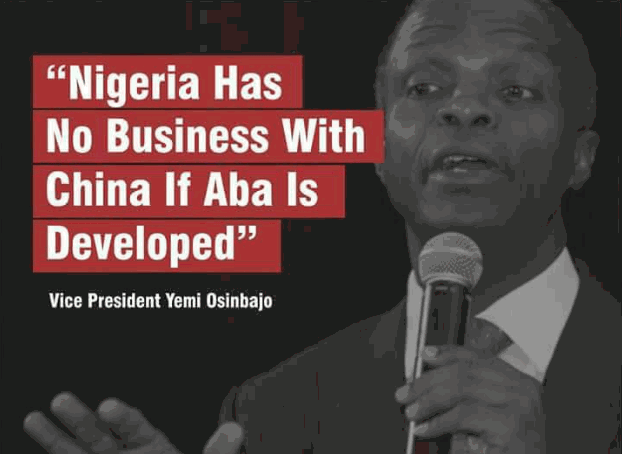
How can an industry develop without electricity?
Many companies are closing down and others moving to nearby countries to establish their business, produce their goods and then import to Nigeria (where the market is) to sell.
Just last year, about 272 companies closed down due to different government policies ranging from foreign exchange restrictions placed by the Central Bank of Nigeria on 41 items to the instability in the local currency.
Companies like Dunlop Nigeria Plc, Michelin, and Prilleri relocated to Ghana, Erisco Foods Ltd (moved its $150M tomato paste processing plant to China), and so on.
In 2016, over four (4) international carriers, including Iberia Airlines and United Airlines, stopped operations in Nigeria, while Kenya Airways and Emirates stopped their Abuja operations.
Other foreign airlines in the country are struggling to survive the hard conditions given to them. They are merely still surviving owing to the fact that Nigeria has a massive population and they love traveling.
Apart from foreign exchange, other factors driving the airlines away include the Bilateral Air Service Agreement (BASA) and the attendant commercial agreement, which many foreign airlines’ host countries signed with Nigeria, include the clause that these airlines must repatriate their revenues earned from ticket sales, so it is not a matter of choice for them to be allowed to do so.
What this means is that if the flight company sells tickets (for passengers coming to Nigeria) from another country, the revenue earned from these tickets are repatriated to Nigeria and used in Nigeria.
This of course will not go down well for every foreign investor.
How Government Frustrates SMEs and Local Manufacturers in General
First, registering a new business in Nigeria is somewhat frustrating. New business owners are made to go through very rigorous processes and delay of their documents for unnecessary reasons.
The Acting President of Nigeria, Prof. Yemi Osinbajo, while speaking a few months back when he was visited by the team from General Electric led by CEO Jeff Immelt, accepted the fact that most government agencies are frustrating the government’s plan on economic recovery. He regretted that these government agencies delay the registration of new businesses.
This could be checked by narrowing down just one agency to oversee the registration process of any kind of business and further guide the business owner on the best options to look into in the chosen niche.
Secondly, access to funding. The Nigerian government, through its Agencies like SMEDAN, BOI, BOA, CBN, and many others always announce different categories of funding for SMEs and manufacturers but accessing these funds is always an issue.
Conditions given to access these funds are almost unattainable for small beginners. You also need to have contact in these Agencies to access the funds.
This could also be checked by setting up an unbiased department in the agencies whose sole function will be to have direct contact with entrepreneurs or groups seeking to access funds and to guide them on how to easily get the necessary documents in order to access the fund. They will also make sure that the A-Z offices the entrepreneur needs to get verified is within the department.
Thirdly, electricity; how can a manufacturer thrive without electricity? Without access to electricity, the company will have to generate its own power and this comes at a high cost. And the most painful part is that most manufacturers are on estimated billing, so whether they use electricity from the power holding company of Nigeria or not, they are charged high rate monthly. Now they have to pay for light and still spend thousands of Naira on diesel.
The government in its effort to stabilize electricity privatized the sector but the process was marred by corruption. Instead of allowing due process and making sure only qualified investors in the electricity niche acquired these companies (generation and distribution), it was sold to the same cabal whose interest is not to make electricity better in the country but to make more money out of Nigerians through the dubious estimated billing as up to date and still not improve electricity, many household and industries are still without pre-paid meters.
The Nigeria Minister of Power, on many occasions, has warned the electricity distribution companies to meet the conditions in their contract.
Fourthly is the issue of multiple taxation and high rate of property rent in the country. Narrowing this point down to the small entrepreneur in the street who manages to start up a small-scale business from savings or loan from family, the multiple taxation and high rate of property rent become an issue.
Nothing encourages the young man/woman in the street to keep pushing. It is as if you are working and the government is eating all your sweat and yet, you have nothing to show for what you are paying in tax.
Take, for instance, a small waterproof manufacturer around my office in the east; the man has machines of different sizes and capacities for production.
He produces hundreds of thousands of two different types of waterproofs monthly. He employed 13 workers.
Here are the taxes the young man told me he pays yearly: company income tax, education tax (imposed on all companies incorporated in Nigeria), Personal income tax, and capital gains tax. This is taxed by FIRS.
He is also subjected to the following levies: ESWAMA Levy (sanitation), and he must buy their bucket yearly, and then he pays the local government levy.
All these expenses do not include rent (very high), electricity (very high but hardly on).
Electricity is a major factor for this manufacturer as he cannot produce without it. Notwithstanding that he hardly sees power, he is subjected to estimated billing, which is very high.
He always runs his business by generating his own light, thereby spending hundreds of thousands of Naira on diesel (fuel for powering his generator) monthly. In Nigeria, 1 litre of diesel sells for around #1060 – #1200 (2025 rate)
Assuming he finds it difficult getting buyers for his product at a rate that will still keep him in business, tell me how such an entrepreneur will want to remain in business. These factors also cause some of these manufacturers to reduce the quality of their products to increase profit.
This man (my neighbour) is hard working and always makes sure his machines are in good working condition. He produces and sells a good quantity of nylon, but he confided in me that his bank account remains stagnant after expenses.
Other suggestions to the Government on how to reduce the stress of running a business in Nigeria?
In Nigeria, there are cases of Government Agencies with similar roles. All these Agencies with duplicated duties should be pruned down.
For instance, to be a producer of consumables in Nigeria, one must get authorization from Agencies like SON, NAFDAC, NESREA, Ministry of Environment, Ministry of Health, etc.
To import into or export from the country, an entrepreneur have SON, NAFDAC, CUSTOMS, IMMIGRATION, NASERA, MIN OF HEALTH, NIGERIA EXPORT AND IMPORT PROMOTION COUNCIL, etc to contend with.
In the airport, you have more than three Agencies checking the same thing.
On the road, you have the Police, Army, Civil Defence, VIO, FRSC, NDLEA, Customs, Ministry of Transport, Ministry of Agriculture (Produce), LGA task forces, and even the Navy these days all mounting road blocks checking for particulars, exhibits, health of vehicle and many other things on the road.
All these in one way or the other affect the entrepreneurs transporting their goods or raw materials. The many roadblocks on the road equal more extortion from the drivers, especially if he defaults in any little way. The Nigerian Police on the road is notable for their continued extortion of motorists on the roads. You risk being delayed by the officers if you refuse to comply with them.
All these affect the price of goods and raw materials in the market.
Recently, the Nigerian Government, through the CBN, directed commercial banks to make forex available to small and medium enterprises after they had produced some documents to access raw materials, but when you go to the banks, this forex is rarely available. You are told to check back, and most times left to purchase from the black market at high rates.
When one makes a transaction online, one is charged at exorbitant rates by the commercial banks and reason giving by my banker after I noticed in one of the transaction I conducted online was charged at a higher rate different from the transaction in the previous week was that the rates changes due to lack of access of the foreign currency.
It is only in the media that funds are released to commercial banks, but SMEs hardly have access to these funds to transact. It is either the CBN is not very frank with the business sector or that the banks are hoarding the funds for special customers.
In Conclusion
There is need for the government to check the many loopholes mentioned above including importantly the electricity problem in the country, reduce the number of Agencies an investor, entrepreneur or enterprise need to get license from to start operation, give tax incentives to new businesses, reduce the number of road blocks in the highway, fix the roads to reduce accidents and destruction of goods or raw materials being transported, give SMEs direct access to foreign exchange, train it’s workers on the need to be friendly with investors and entrepreneurs trying to start a business or access funding and lastly put up policies that will encourage foreign and local investments.
Thank you.
(Please kindly suggest other ways you feel the government is frustrating SMEs in Nigeria and possible solutions to the problems in the comment box)
Updated (2025)
Also Read:
- What the Nigeria Customs Service Should Do to Generate More Revenue
- 10 Causes of Business Failure
- Impact of Entrepreneurship on the Economy of a Nation
- 10 Principles of Entrepreneurship
©FrancisNwokike