
Investing for Beginners With Little Money: Start Building Wealth Today

Here’s a little secret that often goes unspoken about investing: you don’t need a mountain of cash to get started. You don’t have to be a financial whiz, and you certainly don’t need to be wealthy.
I used to think that I needed at least $5,000 to “properly” start investing. That mindset kept me on the sidelines for years, watching my money sit in a savings account, barely earning anything. What a missed opportunity!
The truth is, investing for beginners with little money is not just possible—it’s actually easier now than ever before. You can kick things off with as little as $10, $50, or $100 and start building real wealth. The most important thing is to take that first step, rather than waiting for the “perfect” amount to invest.
Let me guide you through the process.
What Is Investing? (Simple Explanation)
Investing is all about purchasing assets that (fingers crossed) appreciate in value over time. Unlike saving, where your money just sits idle, investing actively works to earn you more money.
Here’s a quick comparison:
- Saving = keeping your cash safe in a bank account (grows slowly, low risk)
- Investing = buying assets like stocks or funds (grows faster, higher risk)
How does investing help your money grow? It’s all about compound returns. Your investments generate returns, and then those returns generate even more returns, creating a snowball effect over the years. That’s how some people retire with millions, even if they never had sky-high salaries.
Understanding risk versus reward: Higher potential returns usually come with higher risks. Stocks can double in value—or they can drop by 50%. But if you look at the long game (10+ years), the stock market basics show it historically trends upward. That’s why staying invested is often more effective than trying to time the market.
How Much Money Do You Need to Start Investing?
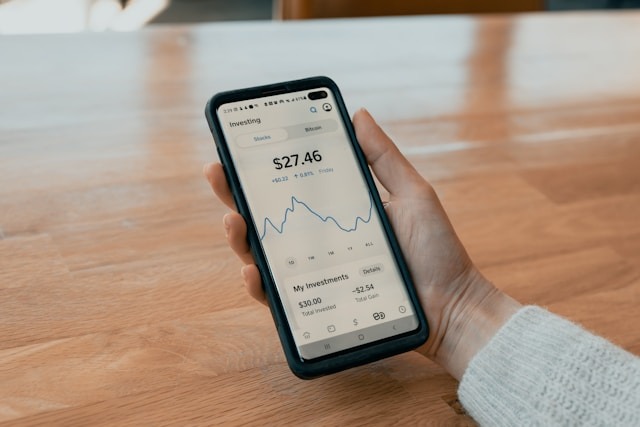
Minimum investment myths: Let’s bust some myths about minimum investments: “You need $1,000 to start investing.” “You have to buy full shares.” “Investing is only for the wealthy.”
All of these are misconceptions! Thanks to fractional shares explained simply: you can snag tiny portions of pricey stocks. Want to invest in Apple but it’s priced at $200 per share? Just buy $10 worth (that’s 0.05 shares). Problem solved!
Starting with $10, $50, or $100:
- $10: Totally doable with apps like Stash or Robinhood.
- $50: A great starting point for a diversified ETF portfolio.
- $100: A solid foundation for learning how to start investing with $100.
Why starting early is more important than starting big: A 25-year-old who invests $100 a month will end up with more by age 65 than a 35-year-old who invests $200 a month. Compound interest rewards time, not just the amount you invest. So, starting small now is way better than waiting to invest a big amount later.
Step 1: Make Sure You’re Ready to Invest
Before you put any money into investments, ensure you’re truly ready.
Emergency fund basics: Aim to save at least $500 to $1,000 before diving into investing. If you don’t have this cushion, an unexpected expense might force you to sell your investments—likely at a loss. That’s not a smart move.
High-interest debt considerations: If you’re carrying credit card debt with a 20% interest rate, tackle that before you think about investing. No investment can reliably beat a 20% return, so it’s best to eliminate that debt first.
Short-term vs long-term goals: If you need access to your money in less than three years, don’t invest it. Instead, keep it in a high-yield savings account. Investing is meant for money you won’t need for at least five years.
Step 2: Choose the Right Investment Account
Brokerage Account: This is your standard investment account without any special tax perks. You can cash out whenever you want (after selling your investments), but keep in mind you’ll owe taxes on any gains. It’s a solid choice for general investing.
Best options: Fidelity, Schwab, Robinhood (all of them have no minimum deposit requirements)
Retirement Accounts (IRA, Roth IRA): These accounts come with tax advantages specifically for saving for retirement. A Traditional IRA gives you a tax deduction now, but you’ll pay taxes later. On the other hand, a Roth IRA doesn’t offer a deduction upfront, but your withdrawals in retirement are tax-free.
Why they’re great for beginners: The tax benefits can really boost your returns. If you qualify, make these accounts a priority over regular brokerage accounts.
Investing Apps for Beginners:
Pros: They’re user-friendly, have low minimums, and allow for fractional shares.
Cons: They might have limited features and can lead to some bad habits (like checking your account too frequently).
Popular apps: Robinhood, Acorns, Stash, Webull, M1 Finance.
I personally use Fidelity because it has everything I need, but when I was just starting out, Robinhood’s straightforward approach made it feel less overwhelming.
Step 3: Best Beginner Investments With Little Money
Index Funds & ETFs: Think of these as collections of various stocks grouped together. Instead of trying to pick individual companies, you can invest in the entire market (or significant portions of it).
Why they’re beginner-friendly: They offer instant diversification. With one purchase, you’re investing in hundreds of companies, which lowers your risk compared to buying individual stocks. Warren Buffett often recommends them for most investors.
Examples: S&P 500 index funds (like VTI, VOO, SPY) and Total Stock Market ETFs.
Fractional Shares: This allows you to buy portions of pricey stocks. Want to invest in Amazon but it’s $180 a share? You can buy just $20 worth. This makes any stock accessible, even if you’re working with a small budget.
Target-Date Funds: These are “set-it-and-forget-it” funds that automatically adjust their risk level as you get older. Just choose one based on your retirement timeline (like “Target Date 2060”), and you’re all set.
High-Yield Savings (Short-Term Goals): NOT investing, but if you need money within 3 years, keep it here earning 4-5% APY safely instead of risking it in stocks.
Step 4: How to Invest With $100 or Less
Let’s look at some straightforward investment ideas:
- You could put $50 into an S&P 500 ETF, which gives you instant diversification across 500 different companies.
- If you have $100, consider splitting it: $70 in VOO and $30 in a bonds ETF.
- Another option is to invest $25 each week, which adds up to $1,300 a year.
Now, let’s talk about dollar-cost averaging: This means investing the same amount regularly, no matter what the price is. When prices are high, you buy fewer shares, and when they’re low, you buy more. Over time, this evens out and helps you avoid emotional decisions in investing.
For automatic investing strategies, set up automatic transfers from your checking account to your investment account. Then, invest that money automatically into your selected funds. It’s a hands-off approach! Personally, I do this with $100 a month and haven’t checked my account in months—that’s a good thing!
Step 5: Build a Simple Beginner Investment Portfolio
Here are some example portfolio allocations:
- Aggressive (for those in their 20s-30s, with 30+ years until retirement): 90% in stocks (like VTI or VOO) and 10% in bonds (BND).
- Moderate (for those in their 40s-50s, with 10-20 years until retirement): 70% in stocks and 30% in bonds.
- Conservative (for those nearing retirement): 40% in stocks and 60% in bonds.
Balancing risk with your time horizon is key: The longer you have until you need the money, the more risk you can take with stocks. If your timeline is short, lean towards fewer stocks and more bonds.
And remember, keep it simple! Don’t overthink it. A solid long-term investing strategy for beginners is as easy as “buy a total market index fund and forget about it for decades.” Seriously, that approach outperforms 90% of active investors!
Step 6: How to Invest Safely as a Beginner
Let’s talk about diversification: It’s like the old saying goes—don’t put all your eggs in one basket. You want to own shares in a variety of companies across different industries. That way, if one company stumbles, you’re still in good shape. This is where index funds shine—they give you instant diversification without the hassle.
Now, let’s steer clear of the hype and those “get-rich-quick” schemes. If someone is promising you guaranteed returns or claiming to have “secrets Wall Street doesn’t want you to know,” it’s time to run the other way. Things like crypto, penny stocks, and NFTs? They’re more like gambling than investing.
Next up, understanding the market’s ups and downs: Expect the market to dip by 20-40% every few years. That’s totally normal! Don’t let it freak you out. If you’ve invested wisely (with money you won’t need for a while), just ride out those dips and keep investing. Those downturns can actually be great buying opportunities.
I remember watching my portfolio take a 30% hit in 2020. Did I panic and sell? Absolutely not! I bought more shares. Now, I’m sitting pretty with significant gains compared to where I started.
Common Investing Mistakes to Avoid
First off, trying to time the market: No one can consistently predict when the market will peak or bottom out. Research shows that if you miss just the 10 best days in the market over a span of 20 years, your returns could drop by 50%. So, stay invested!
Next, investing without a plan: You need to know why you’re investing and when you’ll need that money. Saying, “I heard stocks go up” isn’t a solid strategy.
And then there’s panic selling: Watching your $1,000 investment shrink to $700 is painful. But selling at that point locks in your loss forever. Hold on through the downturns; that’s how you build real wealth.
Lastly, don’t ignore fees: A 1% management fee might not seem like a big deal, but over 30 years, it can cost you tens of thousands. Opt for low-fee index funds with expense ratios between 0.03% and 0.10%.
How Long Should Beginners Stay Invested?
Short-term vs long-term investing: Less than 3 years = don’t invest in stocks. 5+ years minimum for stocks. 10+ years ideal. 20+ years = life-changing wealth potential.
Power of compounding: $100/month for 30 years at 10% average returns = $226,048. Same investment for 20 years = only $75,937. That extra 10 years more than TRIPLES your money.
When to rebalance: Once a year, check if your allocation drifted (stocks did well, now you have 95% stocks instead of 90%). Sell some winners, buy some losers to get back to target. That’s it.

How Investing With Little Money Adds Up Over Time
Small monthly investment examples:
$50/month for 10 years at 10% return: $10,250 (you invested $6,000)
$100/month for 20 years at 10% return: $75,900 (you invested $24,000)
$200/month for 30 years at 10% return: $452,000 (you invested $72,000)
Why consistency wins: Someone who invests $100/month every month for 30 years will beat someone who invests $500/month for 10 years, stops, then tries to catch up. Consistency and time beat everything.
Frequently Asked Questions
Is it worth investing with little money?
Absolutely! Even starting with just $50 to $100 and adding to it regularly can lead to significant wealth over the years, thanks to the magic of compound returns. For instance, if someone invests $100 a month from age 25 to 65 at an average return of 10%, they could end up with over $600,000. The secret is to start early and stay consistent, rather than needing a big initial investment.
What is the safest investment for beginners?
If you’re just starting out, the safest bet is to go for a diversified index fund, like a total stock market ETF (think VTI or VOO) or a target-date fund. These options spread your risk across hundreds of companies. While they’re not as “safe” as a savings account—since their values can fluctuate—they have a solid track record of recovering and growing over periods of 10 years or more.
Can I lose all my money investing?
You won’t lose ALL your money in a diversified index fund unless every major company goes bankrupt at the same time, which is pretty much impossible. Individual stocks can indeed drop to zero, which is why it’s wise for beginners to stick with diversified funds. Sure, your portfolio might take a hit of 30-50% during market crashes, but historically, it bounces back if you hold on for the long haul.
How often should I invest?
The best approach for investing for beginners with little money is automated monthly investing. By arranging automatic transfers and investments, you’ll be consistently buying into the market, no matter what’s happening. This approach, known as dollar-cost averaging, helps take the emotion out of investing and builds good habits. Weekly or bi-weekly investments work too—just choose a schedule that suits you and stick with it!
Should beginners invest in stocks or ETFs?
For those just starting out, ETFs—especially index ETFs—are the way to go. Individual stocks can be quite risky and demand a lot of research and ongoing attention. With ETFs, you get the benefit of instant diversification across hundreds of stocks with just one purchase. A good starting point would be a total market ETF like VTI or an S&P 500 ETF like VOO. Once you get the hang of things, you can explore other options.
What’s the difference between a stock and an ETF?
A stock represents ownership in a single company, like Apple or Tesla. On the other hand, an ETF is like a basket filled with many stocks. When you buy a share of an S&P 500 ETF, you’re actually getting tiny pieces of 500 different companies. ETFs help spread out the risk, making them a smarter choice for beginners compared to trying to pick individual stocks that will succeed.
Final Thoughts: Start Small, Stay Consistent
Let’s be real—investing for beginners with little money isn’t rocket science. It’s pretty straightforward: consistently buy diversified index funds over the years and leave them alone. The folks who build real wealth aren’t the ones who kick things off with $10,000; they’re the ones who start with just $100 and keep at it.
Here’s your action plan:
- – Save up an emergency fund of $500 to $1,000
- – Open a brokerage or Roth IRA account
- – Invest in a total market index fund (like VTI or VOO)
- – Set up automatic monthly investments
- – Don’t check your account for years (seriously)
The best time to start was a decade ago. The second-best time? Right now.
Clouds
P.S. Don’t forget to bookmark these investing apps for beginners: Fidelity, Schwab, or Robinhood. They all have no minimums and offer fractional shares. Choose one, open an account today, and kick off your journey to financial freedom. Your future self will be grateful!